
Absolutely! Here’s a comprehensive article about Myrtillocactus geometrizans, covering its characteristics, cultivation, and more.

Columnar Growth and Ribs
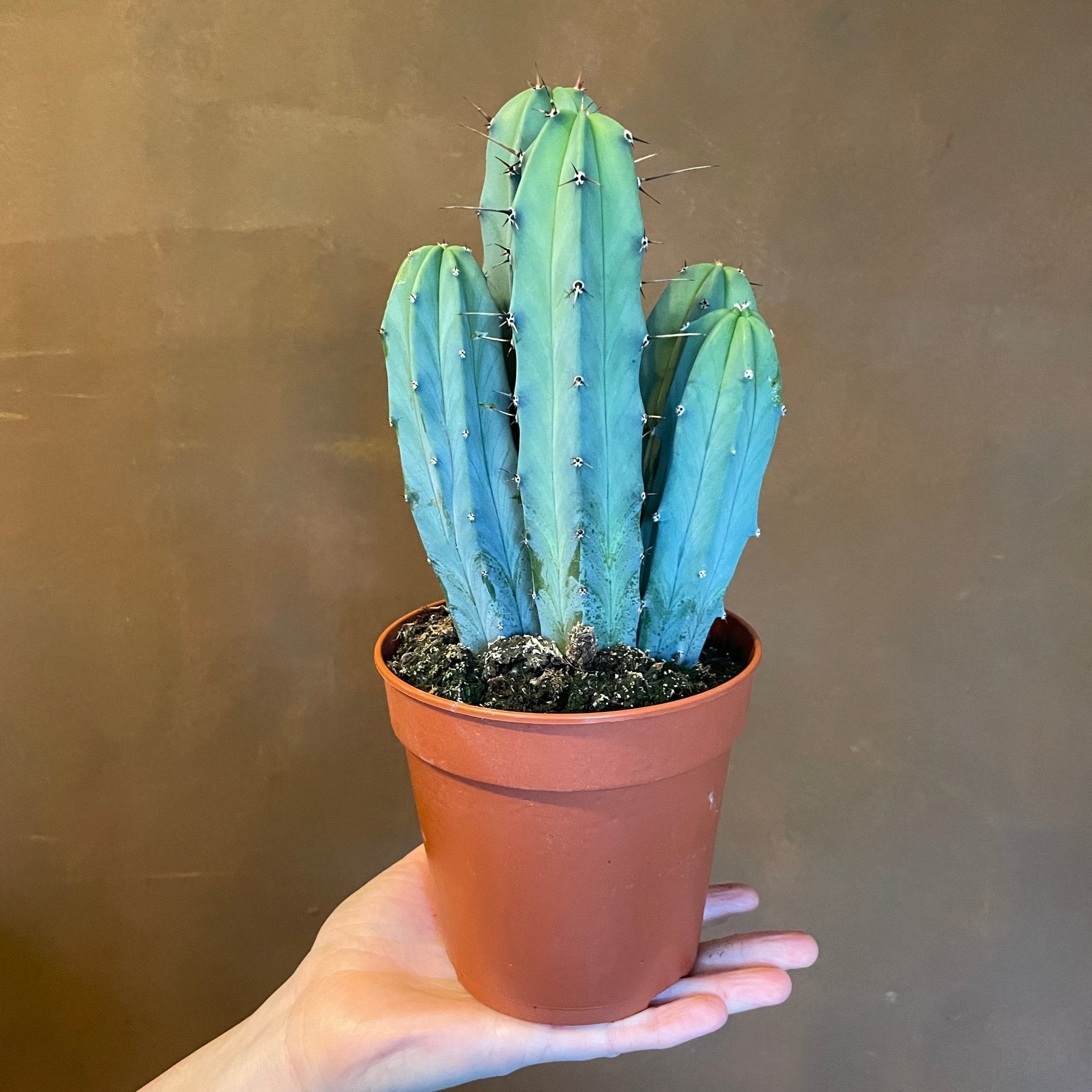
The most defining feature of Myrtillocactus geometrizans is its columnar growth habit. Mature plants can reach heights of up to 4-5 meters, forming branched, candelabra-like structures. The stems are typically 5-10 cm in diameter, exhibiting a striking blue-gray hue due to a waxy coating that helps protect it from intense sunlight. The stems are characterized by 5-8 prominent ribs, which are strongly defined and create a striking geometric pattern. These ribs are adorned with areoles, from which spines emerge.
Spines and Flowers
The areoles of Myrtillocactus geometrizans bear short, stout spines, usually ranging from 3-5 per areole. These spines are typically dark brown or black, contrasting with the blue-gray stem. While they offer some defense against herbivores, they are not overly aggressive. The plant produces small, greenish-white flowers that bloom during the day. These flowers are often inconspicuous but add a subtle charm to the cactus. The flowers are followed by small, purplish fruits that are edible and have a slightly sweet taste.
Growth Patterns
Soil Requirements
Light and Temperature
This cactus requires ample sunlight to maintain its blue-gray coloration and healthy growth. It prefers full sun exposure, ideally 6-8 hours of direct sunlight per day. It is relatively tolerant of high temperatures but needs protection from frost. In regions with freezing temperatures, it is best to cultivate it in containers that can be moved indoors during winter.
Watering
Watering should be done sparingly, allowing the soil to dry out completely between waterings. Overwatering is a common cause of root rot in cacti. During the winter months, watering should be reduced significantly or stopped altogether, as the plant enters a period of dormancy.
Fertilization
Propagation
Propagation can be achieved through seeds or cuttings. Seed propagation is a slow process, while cuttings offer a faster method. Cuttings should be allowed to callous for several days before being planted in well-draining soil.
Blue-Gray Coloration
The distinctive blue-gray color of Myrtillocactus geometrizans is due to a waxy coating on its epidermis. This coating serves to reflect sunlight and reduce water loss, an adaptation to its arid habitat.
Edible Fruits
The fruits of Myrtillocactus geometrizans are edible and have a slightly sweet taste. In some regions of Mexico, they are consumed fresh or used to make jams and preserves.
Ornamental Value
Its unique geometric form and striking coloration make Myrtillocactus geometrizans a popular ornamental plant. It is often used in xeriscape gardens and as a focal point in succulent collections.
Traditional Uses
In traditional Mexican medicine, certain parts of the cactus have been used for various purposes, although scientific evidence supporting these uses is limited.
Root Rot
Root rot is a common issue, primarily caused by overwatering. Ensuring proper drainage and allowing the soil to dry out between waterings is crucial.
Pests
Common pests include mealybugs and scale insects. Regular inspection and prompt treatment with insecticidal soap or neem oil can help prevent infestations.
Sunburn
While Myrtillocactus geometrizans prefers full sun, sudden exposure to intense sunlight can cause sunburn. Gradually acclimating the plant to increased sunlight can prevent this.
Slow Growth
Its slow growth rate can be a challenge for impatient growers. Providing optimal growing conditions and avoiding over-fertilization can promote healthy growth.
Cristata Forms
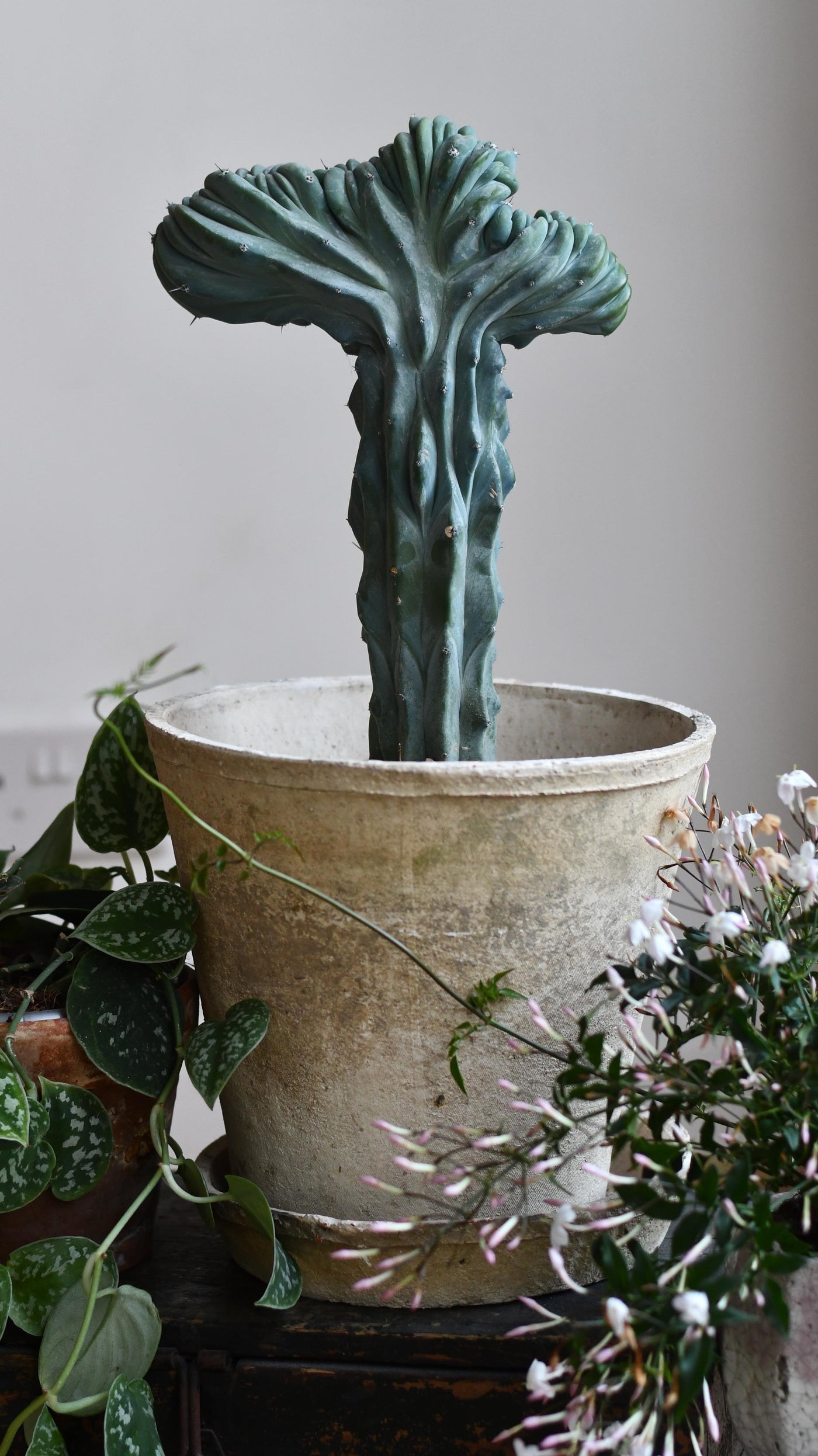
Cristate forms of Myrtillocactus geometrizans are highly prized by collectors. These forms exhibit a fan-like or crested growth pattern, resulting from a genetic mutation.

:strip_icc()/houseplants-you-cant-kill-Final-180244527c60405fb9668911dab14857.jpg?resize=200,135&ssl=1 "Effortless Greenery: Low-Maintenance Plants For Beginner Gardeners")
:max_bytes(150000):strip_icc()/low-light-conditions-houseplants-1902917-834ee8847a324939b796845a6bc22d36.png?resize=200,135&ssl=1 "Shade Savvy: Thriving Indoor Plants For Low-Light Locations")
