The Enigmatic Euphorbia obesa: A Botanical Marvel
Euphorbia obesa, often called the “baseball plant” or “living baseball,” is a captivating succulent species belonging to the vast and diverse Euphorbia genus. Native to the arid regions of the Great Karoo in South Africa, this unique plant has garnered immense popularity among succulent enthusiasts and collectors worldwide. Its distinctive spherical shape, intriguing patterns, and resilience to harsh conditions make it a true botanical marvel. This article delves into the various aspects of Euphorbia obesa, exploring its morphology, habitat, cultivation, and conservation status.
Morphology and Distinctive Features
Euphorbia obesa is characterized by its almost perfectly spherical stem, which can reach up to 20 cm in diameter. This spherical form is an adaptation to minimize surface area and conserve water in its arid habitat. The stem is typically segmented into eight ribs, running vertically along its surface. These ribs are adorned with small, inconspicuous tubercles, which are remnants of reduced leaves.
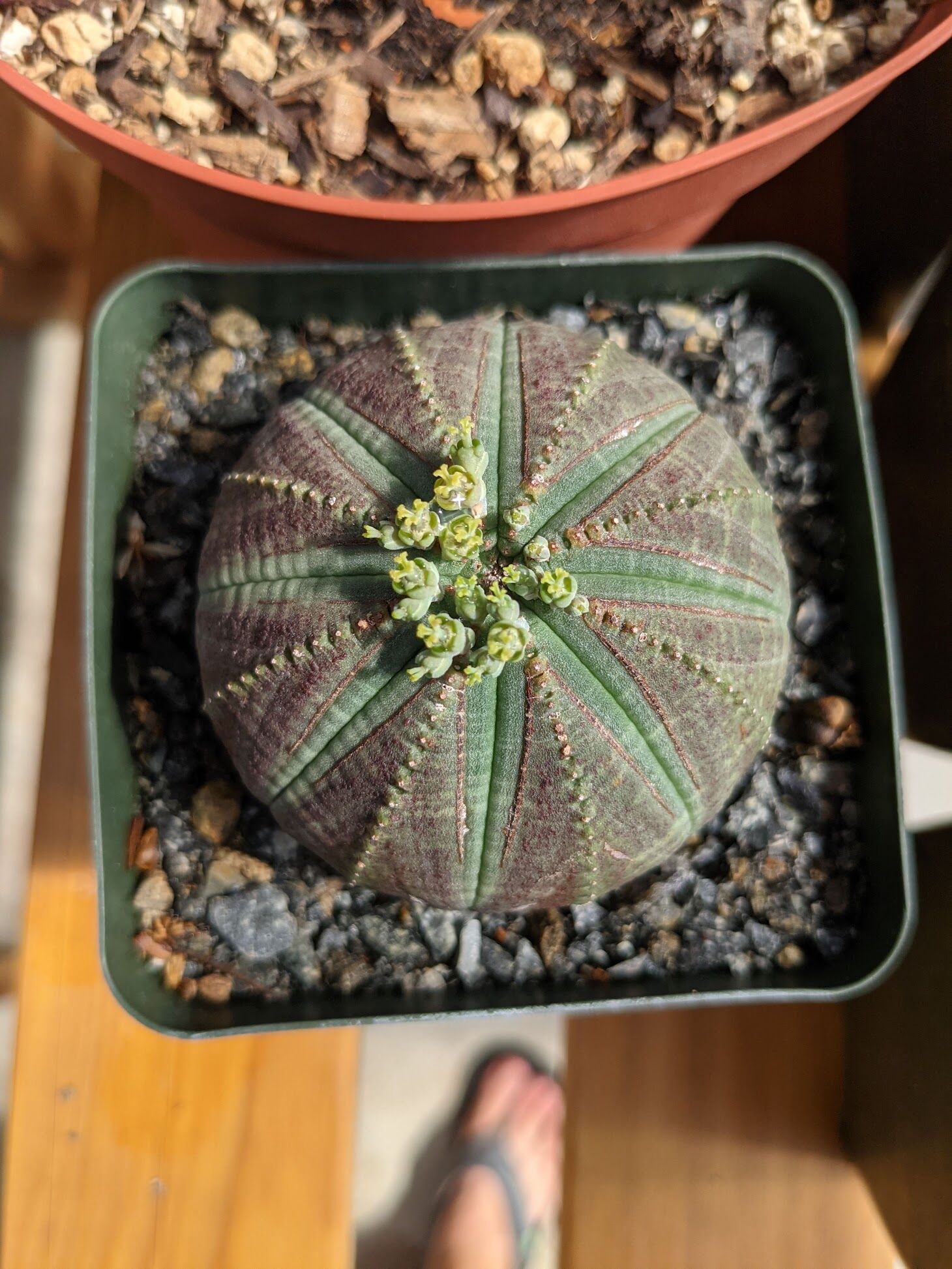
The plant’s coloration varies, ranging from greenish-gray to brownish-gray, often displaying intricate patterns of mottled or banded markings. These patterns are not only aesthetically pleasing but also serve as camouflage, blending the plant with the surrounding rocky terrain.
One of the most remarkable features of Euphorbia obesa is its lack of prominent spines. Instead, it possesses small, rudimentary spine shields, which are remnants of its evolutionary past. This lack of sharp spines makes it relatively safe to handle compared to other Euphorbia species.
Euphorbia obesa is dioecious, meaning it has separate male and female plants. Male plants produce tiny, inconspicuous flowers at the apex of the stem, while female plants develop small, rounded fruits after pollination. These fruits, when mature, explosively release seeds, aiding in the plant’s dispersal.
Habitat and Natural Environment

Euphorbia obesa thrives in the semi-arid to arid regions of the Great Karoo, a vast, sparsely vegetated plateau in South Africa. This harsh environment is characterized by low rainfall, extreme temperature fluctuations, and rocky, well-drained soils.
The plant typically grows among rocks and gravel, blending seamlessly with its surroundings. Its spherical shape and cryptic coloration provide excellent camouflage, protecting it from herbivores and harsh sunlight.
The Great Karoo’s unique ecosystem has shaped Euphorbia obesa’s adaptations. Its ability to store water in its succulent stem, coupled with its efficient water conservation mechanisms, allows it to survive prolonged periods of drought.
Cultivation and Care
Euphorbia obesa is a popular choice for succulent enthusiasts due to its unique appearance and relatively easy care requirements. However, certain factors must be considered to ensure its healthy growth.
Soil and Drainage
Well-draining soil is crucial for Euphorbia obesa. A mixture of standard cactus/succulent potting mix with added perlite or pumice is ideal. This ensures proper aeration and prevents waterlogging, which can lead to root rot.
Watering
Euphorbia obesa is adapted to dry conditions and requires infrequent watering. Allow the soil to dry completely between waterings, especially during the dormant winter months. Overwatering is a common mistake and can be detrimental to the plant’s health.
Light and Temperature
Euphorbia obesa prefers bright, indirect sunlight. Direct, intense sunlight can scorch the plant, especially during the hottest parts of the day. A location with partial shade or filtered sunlight is ideal. The plant is tolerant of a wide range of temperatures but should be protected from frost.
Propagation
Euphorbia obesa can be propagated from seeds or cuttings. Seed propagation is a slow process, but it allows for genetic diversity. Cuttings can be taken from offsets or stem segments, but care must be taken to allow the cut surfaces to callous before planting to prevent rot.
Pest and Disease Management
Euphorbia obesa is relatively resistant to pests and diseases. However, mealybugs, spider mites, and scale insects can occasionally infest the plant. Regular inspection and prompt treatment with appropriate pesticides are essential. Root rot, caused by overwatering, is the most common disease affecting this species.
Conservation Status and Threats
Euphorbia obesa is listed as “Near Threatened” on the IUCN Red List of Threatened Species. This designation reflects the plant’s vulnerability to various threats, including habitat loss, illegal collecting, and climate change.
Habitat Loss
The Great Karoo region is experiencing increasing habitat degradation due to agricultural expansion, mining activities, and urbanization. These activities destroy the plant’s natural habitat and disrupt its ecosystem.
Illegal Collecting
Euphorbia obesa’s popularity among collectors has led to illegal harvesting from the wild. This unsustainable practice threatens the plant’s populations and genetic diversity.
Climate Change
Climate change is exacerbating the already harsh conditions in the Great Karoo. Increased temperatures, reduced rainfall, and more frequent droughts are putting additional stress on Euphorbia obesa populations.
Conservation Efforts
Several conservation efforts are underway to protect Euphorbia obesa. These include habitat protection, public awareness campaigns, and the establishment of protected areas. International trade in Euphorbia obesa is regulated under CITES (Convention on International Trade in Endangered Species of Wild Fauna and Flora) to prevent illegal trafficking.
The Significance of Euphorbia obesa in Botanical Studies
Euphorbia obesa holds significant scientific value due to its unique adaptations and evolutionary history. Its succulent morphology, efficient water conservation mechanisms, and cryptic coloration provide valuable insights into plant adaptation to arid environments.
Evolutionary Adaptations
The plant’s spherical shape, reduced leaves, and lack of prominent spines are adaptations that have evolved to minimize water loss and protect it from herbivores. Studying these adaptations can enhance our understanding of plant evolution and survival strategies in harsh environments.
Physiological Mechanisms
Euphorbia obesa’s ability to store water and regulate its water balance is a testament to its efficient physiological mechanisms. Research into these mechanisms can contribute to our knowledge of plant physiology and drought tolerance.
Genetic Diversity
Maintaining the genetic diversity of Euphorbia obesa is crucial for its long-term survival. Studies on its genetic diversity can inform conservation strategies and ensure the plant’s adaptability to changing environmental conditions.
Cultural and Horticultural Importance
Euphorbia obesa has become a popular ornamental plant, prized for its unique appearance and low maintenance requirements. Its spherical form and intricate patterns make it a striking addition to any succulent collection.
Horticultural Applications
Euphorbia obesa is widely used in xeriscaping, rock gardens, and container gardening. Its ability to thrive in dry conditions and its low water requirements make it an ideal choice for water-wise landscaping.
Collection and Display
Collectors often display Euphorbia obesa in decorative pots, showcasing its unique form and patterns. Its compact size and low maintenance requirements make it suitable for indoor and outdoor displays.
Educational Value
Euphorbia obesa serves as an excellent educational tool, demonstrating the adaptations of plants to arid environments. It can be used to teach students about succulent morphology, water conservation, and the importance of biodiversity.
Conclusion
Euphorbia obesa is a remarkable succulent species that embodies the resilience and adaptability of plants in harsh environments. Its unique morphology, efficient water conservation mechanisms, and cryptic coloration make it a true botanical marvel. However, this fascinating plant faces numerous threats, including habitat loss, illegal collecting, and climate change. Conservation efforts are crucial to ensure its long-term survival and protect its valuable genetic diversity. By understanding its biology, ecology, and conservation needs, we can appreciate the significance of Euphorbia obesa and contribute to its preservation for future generations.

:strip_icc()/houseplants-you-cant-kill-Final-180244527c60405fb9668911dab14857.jpg?resize=200,135&ssl=1 "Effortless Greenery: Low-Maintenance Plants For Beginner Gardeners")
:max_bytes(150000):strip_icc()/low-light-conditions-houseplants-1902917-834ee8847a324939b796845a6bc22d36.png?resize=200,135&ssl=1 "Shade Savvy: Thriving Indoor Plants For Low-Light Locations")
