Absolutely! Here’s a comprehensive article about the Syngonium Albo, crafted to be informative and engaging, with the list items you requested converted to headings.
The Enchanting Syngonium Albo: A Comprehensive Guide
The Syngonium Albo, also known as Syngonium Podophyllum ‘Albo-Variegatum’, has captured the hearts of plant enthusiasts worldwide with its stunning variegated foliage. This tropical beauty, native to Central and South America, is prized for its unique patterns and relatively easy care. However, to truly thrive, it requires specific attention. This guide will delve into every aspect of Syngonium Albo care, ensuring your plant flourishes.
Introduction:
How to Grow and Care for Syngonium Albo Variegata
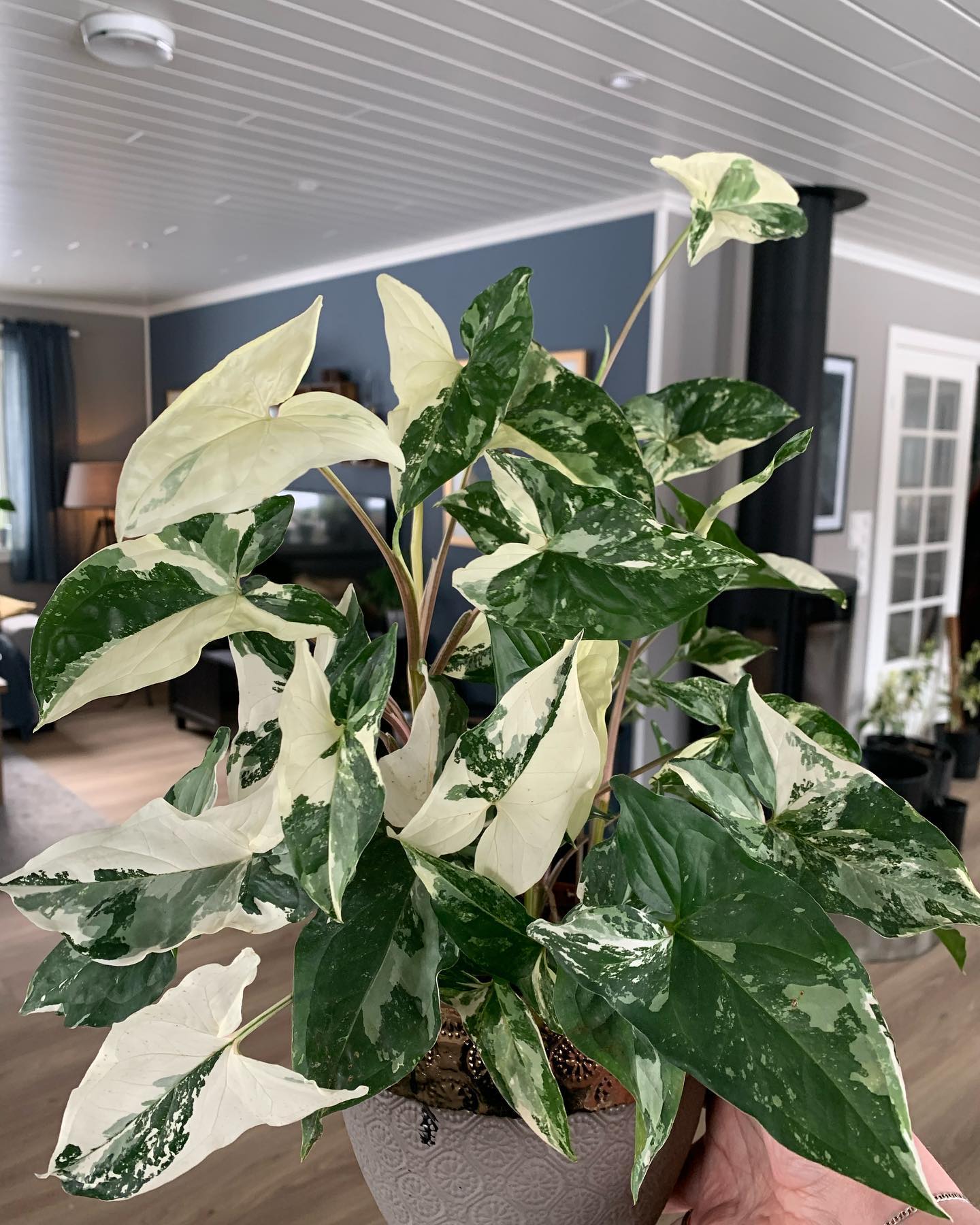
The Syngonium Albo stands out with its striking leaves, exhibiting a captivating mix of deep green and pure white sections. No two leaves are identical, adding to its allure. As a member of the Araceae family, it shares characteristics with other popular houseplants like Monsteras and Philodendrons. Its vining nature allows it to climb or trail, making it versatile for various display options.
Understanding the Syngonium Albo
Botanical Background:
Syngoniums, in general, are known for their adaptability and resilience. The ‘Albo-Variegatum’ cultivar, however, requires a bit more finesse due to its variegation. The white portions of the leaves lack chlorophyll, making them less efficient at photosynthesis.
Aesthetic Appeal:
The contrast between the green and white on its leaves creates a visually arresting display. This variegation can range from subtle speckles to dramatic, half-moon patterns.
Growth Habits:
Syngonium Albos are vining plants that can climb when provided with a support structure like a moss pole. Alternatively, they can trail gracefully from hanging planters.
Optimal Growing Conditions
How to Grow and Care for Syngonium Albo
Light Requirements:
Bright, indirect light is crucial. Direct sunlight can scorch the delicate white portions of the leaves. Insufficient light, on the other hand, can lead to a loss of variegation.
Watering Techniques:
Maintain consistently moist soil, but avoid overwatering. Allow the top inch or two of soil to dry out before watering again. Proper drainage is essential to prevent root rot.
Humidity and Temperature:
Syngonium Albos thrive in high humidity environments. Regular misting, a humidifier, or a pebble tray can help maintain optimal humidity levels. They prefer temperatures between 60°F and 80°F (15°C and 27°C).
Soil and Potting:
A well-draining potting mix is vital. A blend of peat moss, perlite, and orchid bark is ideal. Ensure the pot has drainage holes to prevent waterlogging.
Care and Maintenance
Fertilization:
Feed your Syngonium Albo with a balanced liquid fertilizer during the growing season (spring and summer). Dilute the fertilizer to half strength and fertilize monthly. Reduce or cease fertilization during the dormant season (fall and winter).
Pruning:
Regular pruning encourages bushier growth and helps maintain the plant’s shape. Pinch off the tips of the vines to promote branching. Remove any yellow or brown leaves to keep the plant healthy.
Propagation:
Syngonium Albos are easily propagated through stem cuttings. Take a cutting with a few nodes and place it in water or moist soil until roots develop. Once rooted, transfer the cutting to a pot with well-draining soil.
Pest and Disease Control:
Watch out for common houseplant pests like spider mites, mealybugs, and aphids. Treat infestations promptly with insecticidal soap or neem oil. Root rot is a common issue caused by overwatering.
Insufficient light is the primary cause. Move the plant to a brighter location with indirect light.
Yellowing Leaves:
Overwatering, underwatering, or nutrient deficiencies can cause yellowing leaves. Assess your watering habits and fertilize as needed.
Drooping Leaves:
This can be a sign of either overwatering or underwatering. Check the soil moisture and adjust accordingly.
Enhancing Growth and Display
Moss Poles:
Providing a moss pole allows the Syngonium Albo to climb, mimicking its natural habitat. This encourages larger leaf growth.
Hanging Planters:
Hanging planters showcase the plant’s trailing vines, creating a stunning visual display.
Terrariums:
Syngonium Albo can also thrive in terrariums, where high humidity is easily maintained.
Important Considerations
Toxicity:
Syngoniums are toxic to pets and humans if ingested. Keep them out of reach of children and animals.
Variegation Instability:
Variegation can change over time. Some leaves can produce more green, or more white. This is part of the plants natural variation.
Conclusion:
The Syngonium Albo is a captivating houseplant that adds a touch of tropical elegance to any indoor space. By providing the right growing conditions and care, you can enjoy its stunning variegated foliage for years to come. With proper care, this plant will be a wonderful addition to any plant collection.

:max_bytes(150000):strip_icc()/SPR_syngonium_albo_growing_guide_002-8dea02517cfe42d3b65ce230f894c827.jpg "image.title")


