
Absolutely! Here’s a 3000-word article about Akebia quinata, formatted with `
` and `
` tags instead of “.
Akebia quinata, commonly known as the chocolate vine, is a captivating climbing vine originating from East Asia, particularly China, Japan, and Korea. Renowned for its unique, fragrant flowers and edible fruit, it has garnered attention from gardeners and botanists alike. This article delves into the various aspects of Akebia quinata, exploring its botanical characteristics, cultivation, ecological impact, and cultural significance.
Botanical Characteristics
Akebia quinata is a deciduous or semi-evergreen vine, meaning it may shed its leaves in colder climates. Its vigorous growth habit allows it to climb and twine around structures, making it an excellent choice for covering fences, arbors, and walls.
Leaves and Stems

The vine’s leaves are compound, composed of five (quinata) oval leaflets, hence the scientific name. These leaflets are typically dark green, smooth, and possess a slightly leathery texture. The stems are slender, twining, and exhibit a purplish hue when young, gradually turning brown with age.
Flowers
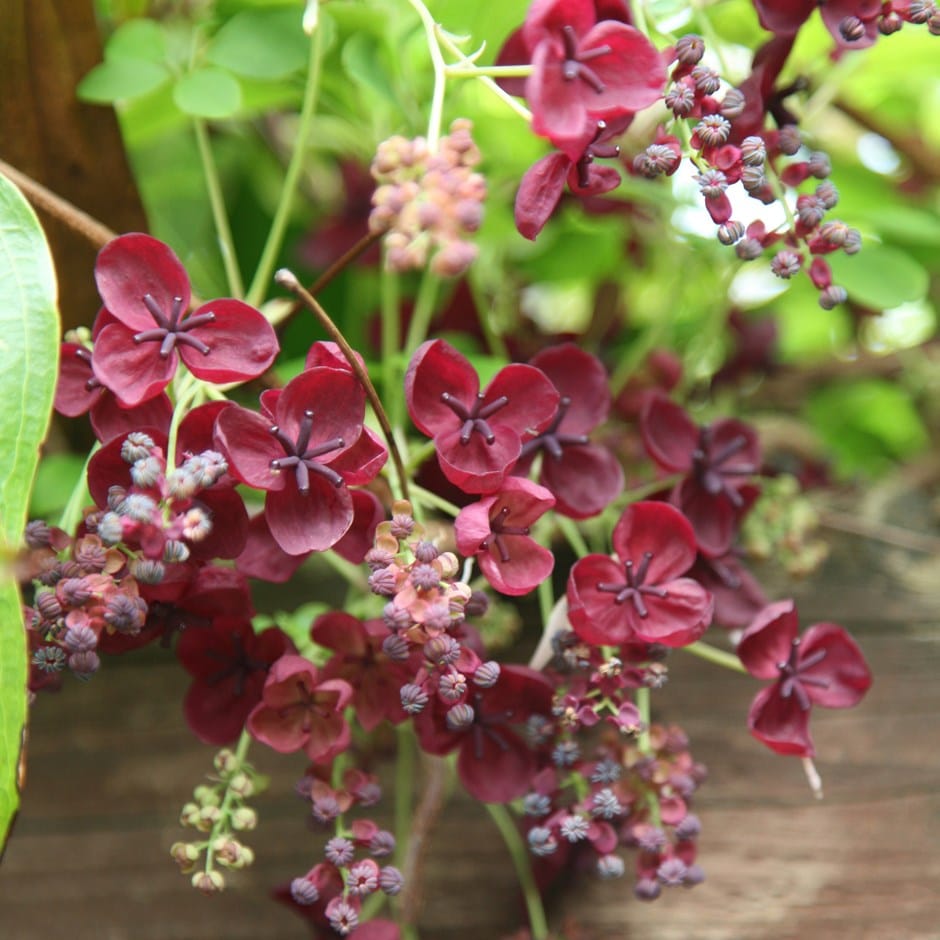
The flowers of Akebia quinata are its most distinctive feature. They bloom in spring, typically in April or May, and are borne in racemes, which are elongated clusters. The flowers are small, about an inch in diameter, and come in two colors: a deep, purplish-brown (hence the “chocolate” moniker) and a pale, lilac-white. The chocolate-colored flowers are female, while the lilac-white flowers are male. They emit a sweet, vanilla-like fragrance, often described as having hints of chocolate, which attracts pollinators.
Fruit
Following pollination, the female flowers develop into edible, sausage-shaped fruits. These fruits are typically 2 to 4 inches long and have a purplish-blue to lavender color when ripe. The pulp inside is white, translucent, and has a sweet, slightly gelatinous texture. The taste is often described as a blend of banana, passionfruit, and lychee.
Cultivation and Propagation
Akebia quinata is relatively easy to cultivate, making it a popular choice for gardeners seeking a low-maintenance climbing vine.
Growing Conditions

The chocolate vine thrives in well-drained soil and prefers full sun to partial shade. It can tolerate a range of soil types, including sandy, loamy, and clay soils, as long as they are not waterlogged. It is also relatively tolerant of urban pollution and can withstand temperatures down to USDA hardiness zones 4 or 5.
planting and Training
Planting is best done in spring or autumn. Young plants should be spaced about 8 to 10 feet apart to allow for their vigorous growth. Providing a sturdy support structure, such as a trellis or fence, is essential for the vine to climb and spread effectively. Training the vine involves gently guiding its tendrils and stems along the support structure.
Propagation
Akebia quinata can be propagated through seeds, cuttings, or layering. Seed propagation is slow and requires stratification, a process of exposing the seeds to cold temperatures to break dormancy. Cuttings, taken from semi-hardwood stems in summer, root more readily. Layering, which involves bending a stem to the ground and covering it with soil until roots develop, is another effective propagation method.
Maintenance
Minimal maintenance is required for Akebia quinata. Pruning can be done in late winter or early spring to control its size and shape. Regular watering is essential during the first year to establish a strong root system. Once established, the vine is relatively drought-tolerant. Fertilization is generally not necessary, especially in fertile soils.
Ecological Impact
While Akebia quinata is a beautiful and useful plant, its vigorous growth can sometimes lead to ecological concerns.
Invasive Potential
In some regions, particularly in the eastern United States, Akebia quinata has demonstrated invasive tendencies. It can spread rapidly, outcompeting native vegetation and disrupting natural ecosystems. Its seeds are dispersed by birds and other animals, contributing to its spread. Monitoring and controlling its growth is crucial in areas where it poses an ecological threat.
Benefits to Wildlife
Despite its potential invasiveness, Akebia quinata provides some benefits to wildlife. Its flowers attract pollinators, such as bees and butterflies, contributing to biodiversity. Its fruits are also consumed by birds and other animals, providing a food source.
Cultural Significance
Akebia quinata has a long history of use in traditional East Asian medicine and cuisine.
Traditional Medicine
In traditional Chinese medicine, the stems of Akebia quinata, known as “mu tong,” are used to treat various ailments, including urinary tract infections, edema, and inflammation. The fruits are also believed to have medicinal properties, though scientific evidence supporting these claims is limited.
Culinary Uses
The fruits of Akebia quinata are edible and are consumed in some East Asian countries. They can be eaten fresh, added to desserts, or made into jams and jellies. The young shoots and leaves are also edible and can be cooked as vegetables.
Ornamental Value
Beyond its culinary and medicinal uses, Akebia quinata is highly valued for its ornamental appeal. Its fragrant flowers and attractive foliage make it a popular choice for landscaping. Its ability to climb and cover structures adds to its versatility in garden design.
Challenges and Considerations
While Akebia quinata offers numerous benefits, there are some challenges and considerations to keep in mind.
Pest and Disease Resistance
Akebia quinata is generally resistant to pests and diseases. However, it can be susceptible to scale insects and spider mites. Good air circulation and proper watering can help prevent these issues.
Growth Control
Due to its vigorous growth, Akebia quinata can quickly become overgrown if not properly managed. Regular pruning is essential to control its size and prevent it from becoming invasive.
Pollination
To ensure fruit production, both male and female flowers must be present. Since they are dioecious, meaning male and female flowers are on separate parts of the plant, planting multiple vines can increase the likelihood of pollination.
Conclusion
Akebia quinata, the chocolate vine, is a fascinating plant with a rich history and diverse uses. Its fragrant flowers, edible fruits, and vigorous growth make it a valuable addition to gardens and landscapes. However, its potential invasiveness necessitates careful management and monitoring. By understanding its botanical characteristics, cultivation requirements, and ecological impact, gardeners and enthusiasts can appreciate and responsibly utilize this intriguing vine. Its cultural significance in traditional medicine and cuisine further highlights its multifaceted nature. As Akebia quinata continues to captivate with its unique charm, it remains a testament to the diverse and wondrous world of plants.

:strip_icc()/houseplants-you-cant-kill-Final-180244527c60405fb9668911dab14857.jpg?resize=200,135&ssl=1 "Effortless Greenery: Low-Maintenance Plants For Beginner Gardeners")
:max_bytes(150000):strip_icc()/low-light-conditions-houseplants-1902917-834ee8847a324939b796845a6bc22d36.png?resize=200,135&ssl=1 "Shade Savvy: Thriving Indoor Plants For Low-Light Locations")
