:max_bytes(150000):strip_icc()/low-light-conditions-houseplants-1902917-834ee8847a324939b796845a6bc22d36.png?ssl=1 "Shade Savvy: Thriving Indoor Plants For Low-Light Locations")
Have you ever looked at a dimly lit corner of your home and wished you could bring some green life to it? Maybe your apartment is north-facing, or your office space just doesn’t get much sun. It’s a common problem for plant lovers, but here’s the good news: having a low-light space doesn’t mean you have to give up on your indoor garden dreams!
In fact, some of the most popular and resilient houseplants actually prefer living out of the sun’s direct spotlight. These plants are the unsung heroes of the interior design world, bringing vibrant foliage and a touch of nature to even the shadiest nooks. We’re going to dive deep into the best low-light plants, how to keep them happy, and why they are the perfect choice for your dim, yet cozy, corners.
—–
🧐 Understanding Low Light
:max_bytes(150000):strip_icc()/low-light-conditions-houseplants-1902917-834ee8847a324939b796845a6bc22d36.png "image.title")
First, let’s talk about what “low light” really means in the houseplant world. It’s not total darkness! No plant can survive without any light, as they all need it for photosynthesis (making food).
Low Light: Generally refers to a spot that receives light only for a very short period of the day, or a place where the light is highly filtered and diffused. Think of a room with a north-facing window, or a corner far away from any window. You should still be able to read comfortably in this area during the day.
Plants that thrive in low light have adapted to survive on the forest floor, where the canopy above blocks most of the sun. They’re built to make the most of those dim conditions, and sometimes, too much direct light can actually hurt their delicate leaves!
—–
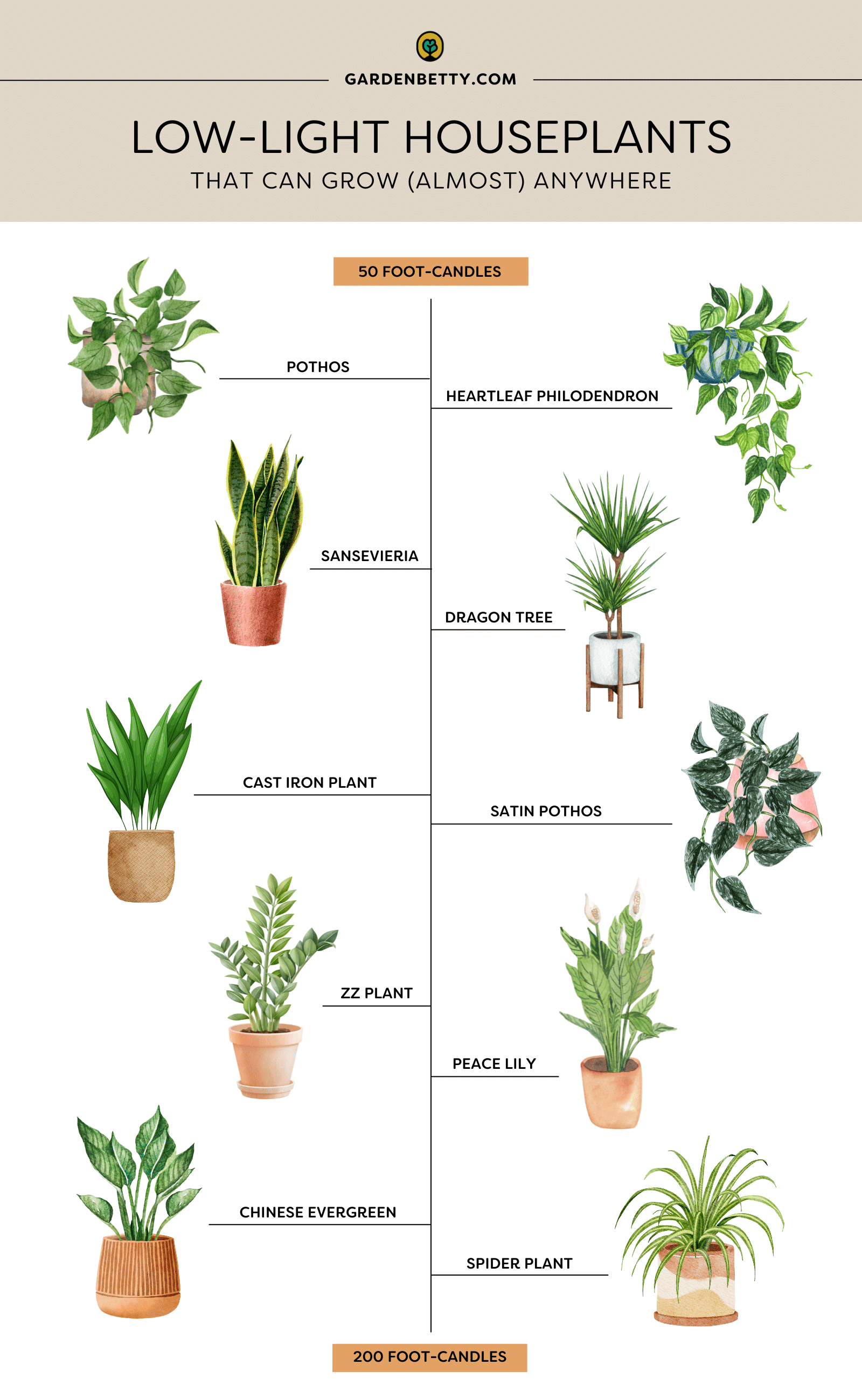
🪴 The All-Stars of Shade: Best Low-Light Indoor Plants
If you’re ready to start filling those dark spaces, here are the top plants that will not just tolerate, but genuinely thrive in low light conditions.
The Indestructibles: Snake Plant and ZZ Plant
These two are often recommended for beginners and for a good reason—they are incredibly hard to kill. Their resilience makes them ideal for the darkest corners of your home.
Snake Plant (Sansevieria trifasciata)
The Snake Plant, also known as Mother-in-Law’s Tongue, is a sculptural beauty with stiff, upright, sword-like leaves.
Why it loves the shade: It’s famous for being adaptable. While it will grow faster in brighter light, it is perfectly happy to sit in a dimly lit hallway or bathroom.
ZZ Plant (Zamioculcas zamiifolia)
The ZZ Plant is recognizable by its thick, waxy, dark-green leaves that sprout up from the soil. It has a modern, minimalist look.
Why it loves the shade: This plant grows from rhizomes (underground stems) that store water, which is part of why it’s so drought-tolerant and doesn’t need much light to keep going. It’s ideal for an office or a windowless room, provided it gets some consistent artificial light.
Trailing Beauties: Pothos and Philodendron
If you want something that spills over a bookshelf or hangs from a high corner, these trailing plants are the perfect fit for low light.
Pothos (Epipremnum aureum)
Also charmingly known as Devil’s Ivy because it’s nearly impossible to kill and stays green even in the dark. Pothos is one of the most popular houseplants, and for good reason.
Why it loves the shade: The standard green or Golden Pothos is incredibly forgiving in low light. You might notice the variegation (the white or yellow markings) fade in darker areas, but the plant itself will keep trailing and growing.
Heartleaf Philodendron (Philodendron scandens)
This classic plant has beautiful, heart-shaped leaves and a fast-growing, cascading habit.
Why it loves the shade: Hailing from tropical rainforests, it naturally grows under a dense canopy, meaning it’s well-equipped to handle indoor low-light situations. It’s often found winding its way up or across walls in dim rooms.
The Flowering Star: Peace Lily
Most flowering plants require a good amount of light, but the Peace Lily is the lovely exception, offering elegant white blooms even in shade.
Peace Lily (Spathiphyllum)
With its dark green leaves and striking white flower-like spathes, the Peace Lily is a beautiful addition to any room, and it’s also a great air purifier.
Why it loves the shade: It’s a true tropical understory plant. In low light, it will produce fewer flowers, but the foliage will remain lush and green. If you want more blooms, move it to a brighter spot, but keep it out of direct sun to prevent leaf burn.
The Architectural Statement: Cast Iron Plant
If you need a bold, tall plant for a very dark corner, look no further than the one named for its toughness.
Cast Iron Plant (Aspidistra elatior)
The name says it all. This is one of the toughest houseplants out there, capable of surviving almost unbelievable levels of neglect and low light.
Why it loves the shade: It’s practically legendary for its ability to withstand deep shade, temperature fluctuations, and infrequent watering. Its dark, strappy leaves are built for dim environments.
—–
💧 Low Light, Less Water: A Golden Rule
One of the most important things to understand when growing plants in low-light conditions is the change in their watering needs.
The rule of thumb is simple: Less Light = Less Water.
Here’s why: Plants use light energy to power photosynthesis, which uses water. When a plant receives less light, it performs less photosynthesis, which means it uses up less water from the soil. If you continue to water a low-light plant as frequently as one in a sunny spot, the soil will stay wet for too long, leading to the dreaded root rot.
To avoid this, always check the soil before watering:
Finger Test: Stick your finger about two inches into the soil. If it feels dry, it’s probably time to water. If it feels moist, wait a few more days.
—–
🌡️ Other Low-Light Care Considerations
While light is the main factor, a few other things can help your shade-loving plants thrive.
Humidity and Temperature
Many low-light plants, like the Peace Lily and Philodendron, come from tropical environments and appreciate a little extra humidity. If your home is very dry, especially in winter with the heating on, try a few things:
Group plants together to create a micro-climate of humidity.
Fertilizing for Shade
Since these plants are growing slowly in lower light, they don’t need much fertilizer. Over-fertilizing can lead to a buildup of salts in the soil and burn the roots.
Recommendation: Feed your low-light plants only during the spring and summer growing season, and only about half as often or half the strength as recommended on the fertilizer label. They are taking it easy, so their nutrient needs are lower.
Dusting the Leaves
In a low-light setting, every bit of light counts. Dust on the leaves acts as a tiny sun-blocker, preventing the plant from absorbing what little light is available.
Recommendation: Gently wipe down the leaves every month or so with a damp cloth to keep the “solar panels” clean and efficient.
—–
🌟 Conclusion
Creating a lush, green indoor space doesn’t require floor-to-ceiling windows. With the right selection of plants, you can transform the most neglected, dim areas of your home into vibrant, life-filled sanctuaries. The Snake Plant, ZZ Plant, Pothos, and Peace Lily are just a few examples of nature’s fantastic versatility, proving that beauty and resilience can indeed flourish in the shade. These easy-to-care-for champions are perfect for beginners, forgetful waterers, and anyone looking to boost their home’s aesthetic without needing a sunroom. Embrace your dark corners—they are just waiting for the perfect green companion!
—–
❓ Frequently Asked Questions (FAQs)
1. Will a low-light plant ever die if I put it in total darkness?
A plant placed in total, complete darkness will eventually die because it cannot perform photosynthesis, the process it uses to create food from light. However, “low light” in an indoor setting usually means a very dim area that still receives some diffused or reflected light, which is enough for the specialized low-light plants like the ZZ or Cast Iron Plant to survive and maintain their foliage for a long time. For windowless rooms, a consistent source of artificial light is highly recommended.
2. How do I know if my low-light plant is getting enough light?
The main sign is a loss of growth and vigor. A plant that is not getting enough light will often stop growing entirely, its leaves might become smaller or paler, and variegated patterns (like the yellow on a Golden Pothos) will fade to solid green. If it’s a flowering plant like the Peace Lily, it will stop producing blooms. Conversely, if a plant is getting too much light, its leaves will often look scorched, yellowed, or bleached.
3. Can I use a grow light to help my low-light plants?
Yes, absolutely! Grow lights are an excellent way to supplement natural light, especially during dark winter months or in windowless spaces. Look for LED grow lights, as they are energy efficient. For low-light plants, a lower intensity, full-spectrum light placed several feet away for 8–12 hours a day can make a huge difference, encouraging better growth and even more flowers on your Peace Lily.
4. Do low-light plants still clean the air like other houseplants?
Yes, many of the most popular low-light plants are excellent natural air purifiers. Plants like the Snake Plant, Peace Lily, and Philodendron are known to help filter common indoor air toxins. While the air-purifying effect is often subtle, the benefit is there, adding another compelling reason to incorporate these plants into your indoor environment.

:strip_icc()/houseplants-you-cant-kill-Final-180244527c60405fb9668911dab14857.jpg?resize=200,135&ssl=1 "Effortless Greenery: Low-Maintenance Plants For Beginner Gardeners")

:max_bytes(150000):strip_icc()/low-light-conditions-houseplants-1902917-834ee8847a324939b796845a6bc22d36.png?ssl=1&description=Shade%20Savvy%3A%20Thriving%20Indoor%20Plants%20For%20Low-Light%20Locations)