
Absolutely! Here’s a 3000-word article about Rhipsalis, formatted as requested:
Rhipsalis, a genus of epiphytic cacti, presents a captivating departure from the stereotypical image of desert-dwelling succulents. Found primarily in the tropical and subtropical rainforests of Central and South America, as well as parts of the Caribbean and even Africa, these unique plants dangle gracefully from trees, mimicking the appearance of mistletoe. Their delicate, often thread-like stems, and their ability to thrive in shaded, humid environments, make them a fascinating subject for both botanists and houseplant enthusiasts.
A Taxonomic and Evolutionary Glimpse
Rhipsalis belongs to the Cactaceae family, a diverse group known for its succulent adaptations. Within this family, Rhipsalis stands out due to its epiphytic lifestyle, a characteristic that has significantly influenced its morphology and physiology. The genus encompasses a wide variety of species, each exhibiting unique stem forms, from thin, wiry strands to flattened, leaf-like structures.

The evolutionary history of Rhipsalis is a topic of ongoing research. Their adaptation to epiphytic life has led to specialized features, such as aerial roots for nutrient absorption and modified stems for water storage. These adaptations have allowed them to flourish in the challenging conditions of rainforest canopies, where competition for light and nutrients is intense.
Morphological Marvels: A Diversity of Forms
One of the most striking aspects of Rhipsalis is the sheer diversity of its stem morphology. Species within the genus display an array of shapes and sizes, ranging from thin, thread-like stems in species like Rhipsalis capilliformis to flattened, leaf-like structures in Rhipsalis platycarpa.
Thread-like Stems: These species, often referred to as “mistletoe cacti,” possess long, slender stems that hang gracefully, creating a cascading effect. The thin stems minimize water loss and maximize surface area for light capture in the shaded rainforest environment.
Ecological Roles and Habitat
Rhipsalis plants are epiphytes, meaning they grow on other plants, primarily trees, without parasitizing them. They obtain water and nutrients from rainfall, humidity, and debris that accumulates on the host tree. Their roots serve to anchor them to the host and absorb moisture and nutrients.
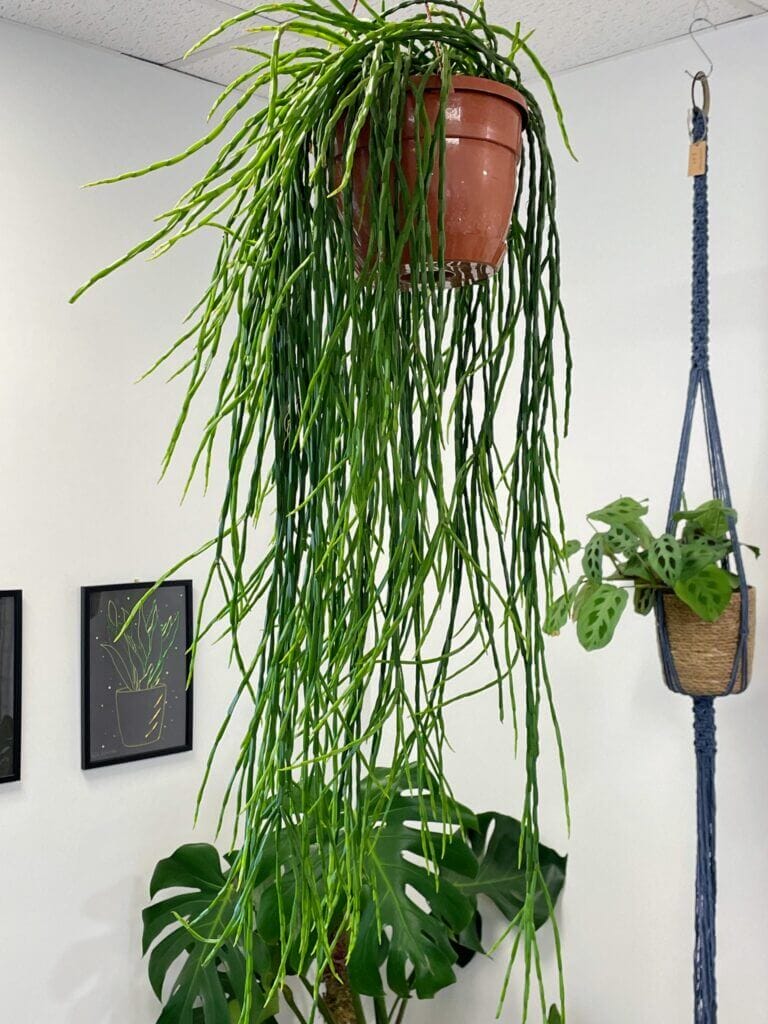
These cacti play vital ecological roles in rainforest ecosystems. Their flowers provide nectar for pollinators, and their fruits serve as a food source for birds and other animals. By growing on trees, they contribute to the biodiversity and complexity of the forest canopy.
Rhipsalis are typically found in tropical and subtropical rainforests, where they thrive in warm, humid conditions with filtered sunlight. Their natural habitats include:
Central and South America: The Amazon rainforest and other regions rich in epiphytic flora.
Cultivation and Care: Bringing the Rainforest Home
Rhipsalis plants have gained popularity as houseplants due to their unique appearance and relatively easy care requirements. They are well-suited for indoor environments, provided they receive appropriate conditions.
Light: Rhipsalis prefers bright, indirect light. Direct sunlight can scorch their delicate stems. A north- or east-facing window is often ideal.
Propagation: Expanding Your Rhipsalis Collection
Rhipsalis can be propagated through stem cuttings or seeds. Stem cuttings are the most common and straightforward method.
Stem Cuttings: Take a healthy stem cutting, allowing it to callus for a few days before planting it in a well-draining potting mix. Keep the soil slightly moist until the cutting roots.
Common Species and Their Characteristics
The Rhipsalis genus includes a wide variety of species, each with unique characteristics. Some popular species include:
Rhipsalis baccifera: Known for its slender, cascading stems and small, white berries. It is the most widespread Rhipsalis species, found in both the New and Old Worlds.
Challenges and Pests
While Rhipsalis is relatively easy to care for, it can be susceptible to certain problems:
Root Rot: Overwatering is the primary cause of root rot. Ensure the soil is well-draining and allow it to dry slightly between waterings.
Rhipsalis in Interior Design
Rhipsalis plants have become increasingly popular in interior design, adding a touch of natural elegance to homes and offices. Their cascading stems and unique forms create a visually appealing display, especially when displayed in hanging planters or on shelves. They can be used to add texture and greenery to a variety of interior styles, from modern minimalist to bohemian chic.
Future Research and Conservation
Despite their popularity as houseplants, many Rhipsalis species remain relatively understudied. Further research into their taxonomy, ecology, and physiology is needed to fully understand their diversity and evolutionary history. Conservation efforts are also crucial, as habitat destruction and climate change threaten many rainforest ecosystems where Rhipsalis thrives.
Rhipsalis, with its unique adaptations and captivating beauty, serves as a reminder of the remarkable diversity of the plant kingdom. Their ability to thrive in the challenging conditions of rainforest canopies makes them a testament to the power of evolution and adaptation. Whether displayed as a hanging specimen or integrated into a botanical collection, Rhipsalis brings a touch of the rainforest’s enchantment into our lives.

:strip_icc()/houseplants-you-cant-kill-Final-180244527c60405fb9668911dab14857.jpg?resize=200,135&ssl=1 "Effortless Greenery: Low-Maintenance Plants For Beginner Gardeners")
:max_bytes(150000):strip_icc()/low-light-conditions-houseplants-1902917-834ee8847a324939b796845a6bc22d36.png?resize=200,135&ssl=1 "Shade Savvy: Thriving Indoor Plants For Low-Light Locations")
